
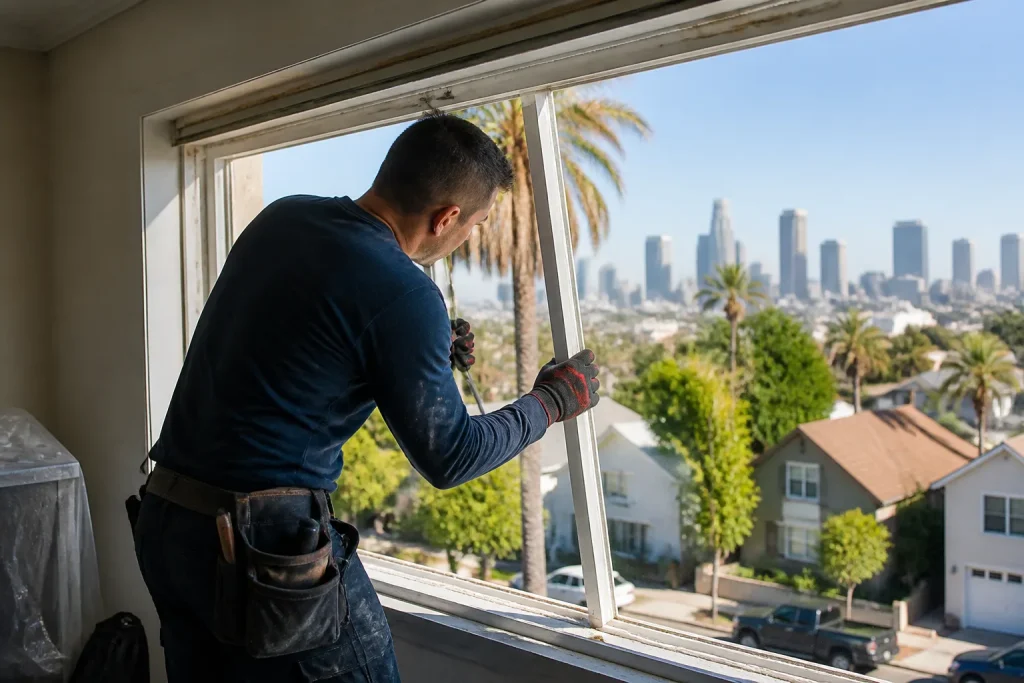
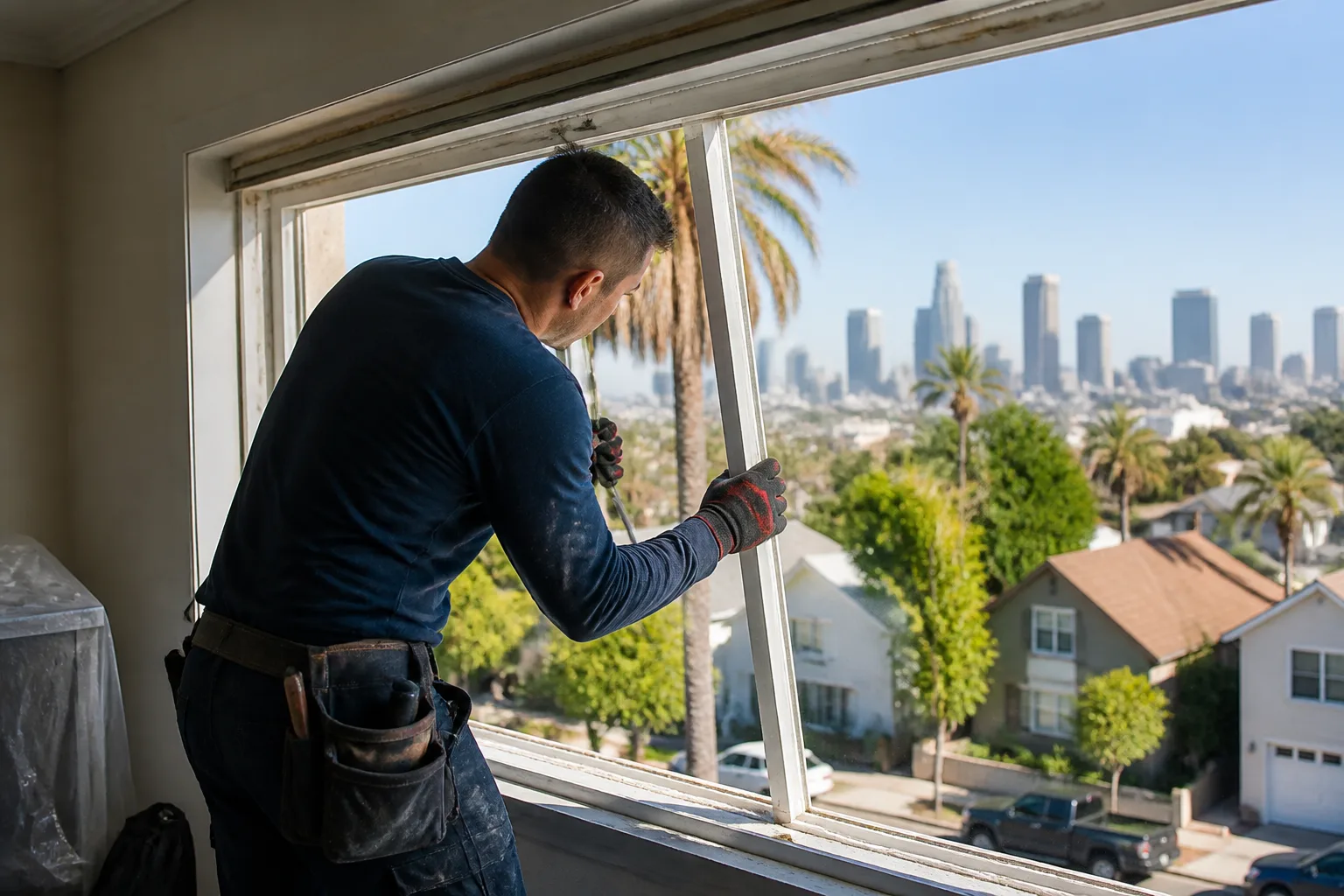
Emergency Window Replacement Near Me: What Los Angeles Homeowners Should Do First
A shattered window in Los Angeles needs a measured response, not a rushed one. The first thing to do is document the damage, secure the opening, and then call a licensed contractor for a written estimate before any work begins. If you’d rather not handle the board-up yourself, call Lightwell Windows & Doors at (562) 478-8017 and we’ll walk you through it while help is on the way.
Most Los Angeles homeowners lose money in a window emergency not because they called late, but because they called without knowing what to ask. They agree to a verbal number over the phone, then watch the final invoice climb. Or they skip the board-up entirely, and the next Santa Ana wind event turns a cracked pane into a living room full of glass and dust. The next 1,500 words cover the exact sequence, room by room, before any contractor sets foot in your home. This is the guide we wish every customer had before they dialed.
What Actually Counts as a Window Emergency in Los Angeles
Not every cracked window is an emergency. A hairline crack in a double-pane window, with the glass still intact and no air movement, can usually wait a few days for a scheduled replacement. But you should treat these situations as urgent in Los Angeles:
- Full penetration: A branch, rock, or thrown object has left an open hole, and air, dust, or rain is moving through the window.
- Shattered tempered glass: Safety glass that has crumbled, even if it is still in the frame, means the window no longer seals and is one bump away from falling out in pieces.
- Security breach: Any opening wide enough for a hand to reach through is an open invitation, especially in ground-floor windows facing the street or an alley.
- Water intrusion during rain: Los Angeles gets most of its rain between November and March. A broken window on the weather side of the house needs same-day attention.
We have pulled broken glass out of homes in Echo Park, Van Nuys, and Torrance where the owner waited “just one night” and woke up to rain-soaked drywall or a missing laptop. The window itself is seldom the expensive part. The water damage, the theft, or the second break-in is what costs you real money.
Step 1: Document the Damage for Your Insurance Before Touching Anything
Your instinct will be to sweep up the glass. That is the wrong first move. Insurance adjusters in Los Angeles look at the break pattern, the impact point, and the surrounding frame condition before they approve a claim. If you clean everything up first, you erase the evidence they need.
Take photos in this order, and keep them in a folder on your phone:
- Wide shot from inside the room showing the whole window, the floor, and what is around it. Adjusters want context.
- Medium shot of the entire window frame and glass, even the parts that are not broken.
- Close-up of the impact point. If a rock or branch came through, photograph it exactly where it landed. Do not move it yet.
- Shot of the floor directly beneath the window showing all debris, glass fragments, and any damaged furniture.
- Exterior shot from outside the home showing the full window, plus any signs of forced entry nearby like a pried screen or chipped frame.
Once you have at least five clear photos, write down the date, time, and a short note about what you saw when you first walked in. Insurance companies in Los Angeles process thousands of window claims after every windstorm. The homeowners who get full replacement value are the ones with dated photos and a written record. The ones who get partial payout are the ones who swept everything into a trash bag and then called their agent.
Step 2: Board Up Correctly, Even If It Is Temporary
A window that is open to the Los Angeles air is a house that is losing heat, inviting moisture, and telling anyone walking by that nobody is watching. Emergency board-up is a stopgap. It buys you the time to make a good replacement decision instead of a desperate one.
Here is what a proper board-up looks like, whether you do it yourself in a pinch or have a contractor handle it:
- ½-inch plywood or OSB cut at least 2 inches larger than the opening on all sides.
- Outdoor-rated screws, not nails. Nails pop loose in wind and vibration.
- Screws driven from the outside into the frame or surrounding wall, never into the glass track.
- Heavy plastic sheeting taped over the interior opening first to contain any remaining glass chips and dust.
- Weather-stripping or foam tape around the plywood edge to keep insects and drafts out until the real window goes in.
Be careful with this work. You are handling broken glass and a heavy panel near a sharp opening. Wear thick gloves, closed-toe shoes, and eye protection. If the window is on a second story, on a steep hillside lot in Silver Lake or Mount Washington, or if the frame itself is compromised, this is not a DIY job. Call a pro. The cost of a same-day board-up in Los Angeles is a fraction of what you will pay if you fall off a ladder or misjudge a screw.
Step 3: Verify the Contractor on CSLB While You Are Still on the Phone
This is the step almost everyone skips, and it is the one that separates a good outcome from a very expensive lesson. Before you agree to anything, ask the contractor for their license number. Then, while they are still on the line, open the California Contractors State License Board website on your phone and look them up. It takes under two minutes.
Here is what to check:
- License status is “Active” and not suspended or expired.
- Classification includes “Glazing” or “C-17” for real window contractors, or at minimum a B General Building license with a glazing specialty disclosure.
- The business name on the license matches the name the person gave you.
- No outstanding complaints or disciplinary actions within the last three years.
- Workers’ compensation insurance is on file. If someone gets hurt on your property and the contractor does not carry coverage, you can be pulled into the claim.
Keith Yamada, owner at Lightwell Windows & Doors, says this is the single most common mistake he sees on emergency callouts in Los Angeles. “A homeowner is rattled, the window is out, and they hire the first person who picks up. Then we show up a week later to fix a board-up that was screwed into their stucco, or a replacement window that was never ordered to code.” A two-minute CSLB search costs nothing. Skipping it has cost plenty.
Step 4: Know What a Written Emergency Estimate Must Include
Verbal estimates in an emergency are how homeowners end up with surprise invoices. The fix is simple: nothing gets started until the number is on paper. A proper written estimate for an emergency window replacement in Los Angeles includes:
- Exact replacement window dimensions and type (single-hung, casement, slider, picture window).
- Glass specification including Low-E coating, tempered vs. annealed, and impact rating where relevant.
- Frame material (vinyl, aluminum, wood, or fiberglass) and whether it is being replaced or reused.
- Labor line item with a clear dollar amount, not “TBD” or “hourly.”
- Disposal fee for the old window and any broken glass as a separate line.
- Timeline for both the temporary board-up and the final replacement.
- Permit requirement stated in writing. Los Angeles requires permits for structural window changes, egress changes, or headered openings. Replacing like-for-like in an existing frame often does not, but the contractor should say so on paper.
If the contractor hesitates on any of these items, walk away. A written price before any work starts is the rule at Lightwell. We put every line item down, from the glass pack to the haul-away, because the last thing an anxious homeowner needs is a second surprise at the end.
Step 5: Choose the Right Replacement Glass for Los Angeles Weather and Break-In Patterns
This is the part where geography actually matters. Los Angeles is not one climate. A window on a hillside in Pacific Palisades needs a different glass spec than one in a ground-floor unit near MacArthur Park.
Santa Ana wind events move debris at 40 to 60 miles per hour. That is fast enough to send a palm frond through a standard annealed pane. Homes in the San Fernando Valley and the foothill communities – Studio City, Sherman Oaks, Burbank, Glendale – see more wind-driven impact damage than anywhere else in the county. If that is your location, you want laminated glass, not just tempered. Laminated glass holds together when it breaks, which buys you hours of weather protection even if it cracks.
Ground-floor windows in dense neighborhoods – Koreatown, Westlake, parts of Hollywood – face a different pressure: forced entry. There, an impact-rated window from a manufacturer like ES Windows or CGI is not overkill. It is the difference between a cleaner that shatters on the first hit and one that holds long enough for the alarm to sound. We also like ECO Window Systems for their hurricane-rated laminates that do not look like storm glass, which matters if you care about the architectural character of a 1920s Spanish Revival in Silver Lake.
A final note on brands: we carry eight manufacturers, and the right one depends on your street, your exposure, and your budget. We have installed Mr-Glass picture windows with Low-E coatings in West Adams where solar heat gain was the real enemy, and Therma-Tru impact-rated sliders in Long Beach facing the marine layer. The brand should follow the house, not the other way around.
When to Call a Pro Instead of Handling It Yourself
Some window emergencies are genuinely dangerous to self-manage. Call a licensed Los Angeles window contractor if:
- The broken window is on a second story or requires ladder work on uneven ground.
- The frame itself is cracked, rotted, or bowed, meaning the opening may not hold a board-up securely.
- You see exposed electrical outlets or wiring near the broken window that could be affected by rain or debris.
- The break happened during a burglary attempt and you need security-rated replacement glass installed with tamper-proof hardware.
- Your insurance claim requires a contractor invoice with specific documentation before reimbursement.
If you are anywhere in Los Angeles and not sure whether your situation needs a professional, call us. A live person answers at (562) 478-8017, day or night. We will tell you over the phone whether it can wait, whether it needs board-up now, and what your immediate options are – no charge for the conversation.
Related services in Los Angeles: if the damage extends beyond one pane or you have been thinking about upgrading your existing windows, see our Window Replacement in Los Angeles page. If the frame requires a full tear-out and new construction install, our Window Installation in Los Angeles service covers it. And if your emergency involves a broken sliding-glass door or entry door, our Door Installation in Los Angeles team handles those too.
Why the Crew in Your House Matters as Much as the Window
An emergency replacement means someone will be in your home quickly, often while your stress is still high. You want a crew that treats the house the way you would. At Lightwell Windows & Doors, our technicians are background-checked and uniformed, and they operate on four rules we call C.A.R.E.: Clean up like it is our own home; Ask before we move or touch anything; Respect the family’s time and quiet hours; Explain the price before the work.
In practical terms, that means shoe covers and drop cloths on every visit, including emergency board-up jobs at 11 p.m. It means a photo of the clean-up before the crew leaves, so you can see that broken glass is not hiding in your carpet. And it means pet-safe sealants and caulks wherever there is a choice, because a dog does not know to stay away from the work area.
We pulled a shattered slider out of a house in Torrance last month where the owner’s two kids were napping in the next room. The crew worked with hand tools for the first hour so the noise would not wake them. That is not in any brochure. It is just the right way to be in someone’s home.
The Bottom Line
When a window breaks in Los Angeles, the sequence matters. Document first. Secure second. Verify the contractor third. Get a written estimate fourth. Then replace with the right glass for your specific neighborhood and exposure. Do those in order and you will pay less, stress less, and end up with a window that actually fits your home.
If you are in Los Angeles and need help now, Lightwell Windows & Doors offers free estimates and a written price before any work starts. Call (562) 478-8017 any hour, day or night. A real person answers, and if we are not the right fit, we will tell you that too.
Frequently Asked Questions
Emergency window replacement in Los Angeles typically runs between $450 and $1,200 per window for standard vinyl or aluminum retrofits, with larger or impact-rated openings starting around $1,500 and going up from there. The emergency board-up itself usually runs $150 to $400 depending on the size of the opening and whether ladder work is involved. Your exact price depends on the glass type, frame condition, and whether the opening needs structural repair. Call (562) 478-8017 for an exact quote, and you will get it in writing before we start.
In many cases, yes. Board-up is available same-day in Los Angeles, and standard-size replacements can often be installed within one to three business days once we have measurements. Impact-rated or custom sizes from manufacturers like ES Windows or Mr-Glass usually take longer because the glass is fabricated to order. The fastest way to know your timeline is to call (562) 478-8017 with the rough opening dimensions if you can safely measure them.
In most cases, yes, if the damage was sudden and accidental – wind, storm, vandalism, or break-in. Your policy deductible applies, which in Los Angeles often runs $1,000 to $2,500. If the replacement cost near your deductible, paying out of pocket may be smarter than filing a claim, since a claim can raise your premium. We provide the photos, written estimate, and invoice documentation that Los Angeles adjusters typically request. Call (562) 478-8017 and we will help you put the evidence file together.
Replacing an existing window with a like-for-like unit in the same opening, with no change to the frame, generally does not require a permit in Los Angeles. Changing the opening size, moving a window, or altering egress does. Your contractor should state the permit requirement in writing before any work begins. If they cannot, find someone who will.
Written by Keith Yamada, Owner at Lightwell Windows & Doors, serving Los Angeles since 2010.
Need Windows & Doors Help?
Call Lightwell Windows & Doors - licensed & insured, here with fast after-hours help in Los Angeles.
(562) 478-8017